
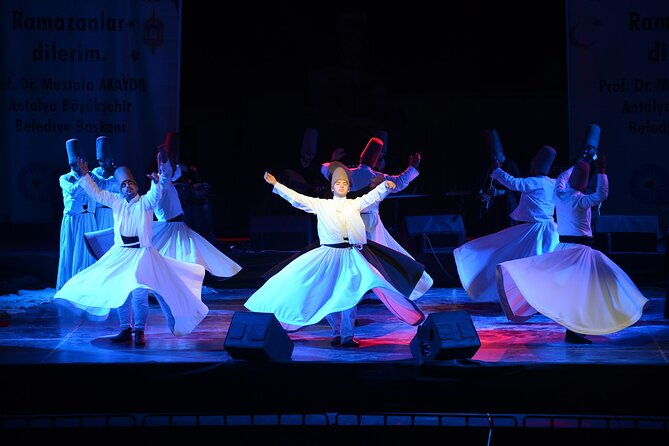
Reviewed · CAPPADOCIA WHIRLING DERVISH CEREMONIES
Cappadocia Whirling Dervish Ceremony
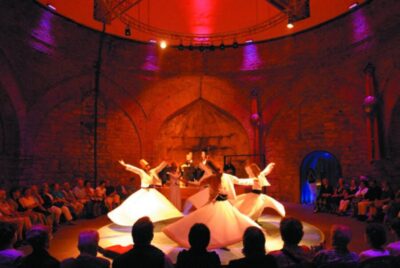
Cappadocia’s Whirling Dervish Ceremony offers a quiet change of pace from balloon flights and valley tours. In Ortahisar, you watch the Sema, a ritual built around prayer, music, symbolism, and the measured turning of the dervishes. The focus is not a stage show with constant action. It is a formal ceremony, and its calm pace matters.
I like the hotel pickup and drop-off, which removes the hassle of finding a remote ceremony venue after dark. I also like the small maximum group of 15, since a modest group makes it easier to settle into the room and watch without a crowd pressing around you.
The main consideration is length. The overall outing lasts about 90 minutes, but the Sema itself may take roughly 40 minutes. That suits you if you want a focused cultural experience, but it may feel brief if you expect a long performance or a full evening of entertainment.
Key points to know before booking
- Ortahisar gives the ceremony a quieter setting away from the usual Cappadocia sightseeing circuit.
- The Sema is a spiritual ritual, not a theatrical dance show, so respectful silence and attention are part of the experience.
- Hotel pickup is offered anywhere in Cappadocia, with return to the same meeting point after the activity.
- The ceremony itself may last about 40 minutes, while the complete experience is scheduled for approximately 1 hour and 30 minutes.
- The group is capped at 15 people, and the activity is offered in English.
- The $38 price includes transport, which makes it more useful for visitors without a car or those staying outside central Göreme.
Why the Sema is worth seeing in Cappadocia
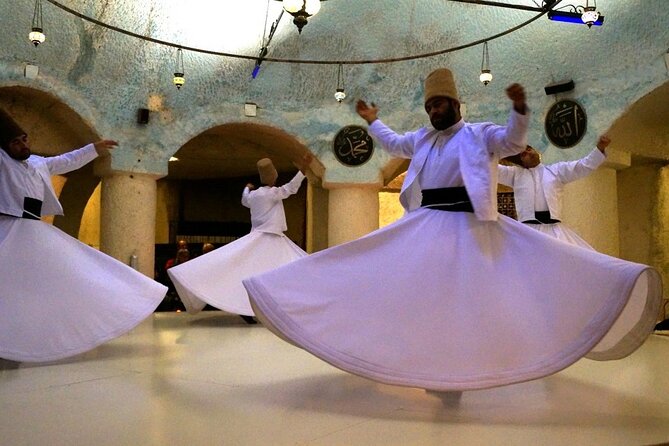
The whirling dervish ceremony can look simple at first: white robes, slow turning, music, and a carefully ordered sequence. The meaning runs much deeper. The Sema represents a spiritual journey through love, the search for truth, and the pursuit of perfection.
You are not simply watching performers spin. You are seeing a symbolic passage from ordinary life toward spiritual maturity. The ceremony then turns back toward the world, with the dervish returning as someone prepared to love and serve all people, regardless of faith, class, or race.
That idea gives the event its particular weight. The turning is not presented as a stunt or a test of balance. It is an act of devotion, and the repeated gestures carry meaning. If you arrive expecting a lively folkloric show, you may find the mood more solemn than anticipated. If you give the ceremony time to settle, its quiet order becomes the point.
The experience also gives you useful context for Turkish and Islamic spiritual traditions without requiring a long museum visit or lecture. You see the symbols in front of you and learn how each part relates to the dervish’s spiritual path.
More whirling dervish ceremonies to book:
- Cappadocia Whirling Dervishes ceremony
★ 5.0 · 276 reviews - Goreme: Whirling Dervishes Show in Historical Cave
★ 4.4 · 169 reviews - Göreme: The Original Dervish Ritual in Konya or Cappadocia
★ 4.5 · 54 reviews
Reading the dervish’s clothing and movements
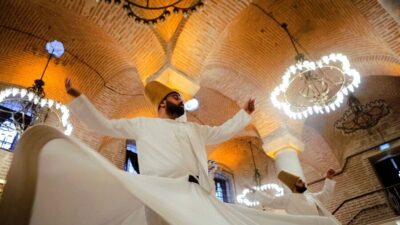
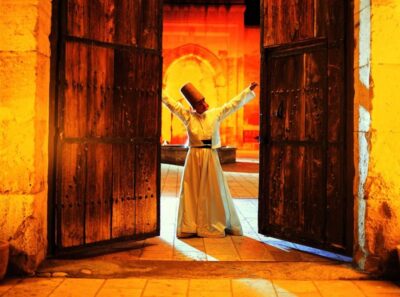
The clothing helps explain the ceremony before anyone says much. The tall Cappadocia Whirling Dervish hat represents the tombstone of the ego. The white skirt represents the covering of the ego.
At the start, the dervish wears a black cloak. Removing it symbolizes a movement away from earthly concerns and toward spiritual maturity. This is one of the clearest visual moments in the ceremony, since the change in clothing reflects the inner change the Sema describes.
The arms also matter. At the beginning and at each stage of the Sema, the dervish keeps the arms crossed. This represents the number one and bears witness to the oneness of Allah.
As the ceremony continues, the turning becomes a form of prayer. The gestures are not random, and the order is not casual. You will get more from the experience if you listen closely to the introduction about the Sema and watch for these details instead of treating the ceremony as background entertainment.
Ortahisar gives the evening a different feel
The activity takes place in Ortahisar, while the stated meeting point is in the Göreme area at İsali, Gaferli, Avcılar, 50180 Göreme, Nevşehir. Hotel pickup connects the two without asking you to arrange a taxi or work out local transport on your own.
Ortahisar is important to the experience because the ceremony is tied to a specific place rather than presented as an interchangeable show in a hotel ballroom. The information provided for the activity specifically introduces the importance of Ortahisar along with the Sema and its symbolism.
You should not expect a sightseeing tour of Ortahisar. The listed stop is centered on the ceremony, and the admission ticket is included. Think of the setting as the place where the ritual happens, not as a separate walking tour with a long list of monuments.
That makes the timing easy to manage. You leave from your hotel, attend the Sema, and return to the same meeting point. For a short evening activity, this simple structure works well.
What the 90-minute schedule really means
The advertised duration is approximately 1 hour and 30 minutes. That total includes the arranged transportation and the ceremony, although the exact travel time depends on your hotel location in Cappadocia.
One session began at 6pm and included a ceremony of about 40 minutes. That gives you a useful expectation: the Sema may be shorter than the full booking window. The remaining time is likely connected to pickup, travel, arrival, and return, but the exact breakdown is not specified.
I see the shorter ceremony as a plus for many visitors. You can add a meaningful cultural event to an already full Cappadocia day without giving up an entire evening. The pace also avoids making the ritual feel padded for tourists.
Still, you should book with the right idea in mind. This is not a two-hour concert or an extended performance with many different acts. You get one focused ceremony and the chance to understand its meaning. If you want an event that leaves plenty of time for dinner afterward, the compact format is helpful. If you want a long program, you may find it too short.
A few more Goreme trips worth putting on the shortlist
- Cappadocia Hot Air Balloon Ride / Royal Balloon
★ 5.0 · 6,829 reviews - Cappadocia: Goreme Hot Air Balloon Flight at Sunrise
★ 5.0 · 4,924 reviews - Cappadocia Hot Air Balloon Ride/ Turquaz Balloons
★ 5.0 · 3,330 reviews - Cappadocia Sunset ATV Tour
★ 5.0 · 2,984 reviews
Pickup makes the $38 price easier to judge
At $38 per person, this is best judged as a cultural outing with transport, not as a ticket to a long show. The price includes pickup from your hotel in Cappadocia and drop-off afterward, which can be valuable in a region where accommodations are spread across several towns and neighborhoods.
You do not have to find the venue independently, arrange a driver, or worry about getting back after the ceremony. That convenience matters most if you are staying outside the center of Göreme, traveling without a car, or trying to keep an evening plan simple.
The value is also stronger if you are already interested in the meaning behind the Sema. The experience includes an explanation of Ortahisar, the Sema, and the ceremony, so you are not left to guess why the dervishes dress and move as they do.
For someone looking only for entertainment, $38 may feel less compelling because the actual turning can last around 40 minutes. For someone who wants a manageable introduction to an important spiritual tradition, the transport and interpretation make the price reasonable.
A small group helps preserve the mood
The activity allows a maximum of 15 people. That is a useful limit for a ceremony that depends on stillness and concentration.
A large crowd can change the feeling of a quiet ritual. People arrive at different times, shift around, or treat the space like a photo stop. A smaller group gives you a better chance to watch without constant movement nearby.
The group cap also makes the pickup arrangement more practical. You are not being folded into a large coach tour with a long list of stops. This remains a compact evening activity, with one primary destination and return transport.
The available information does not name individual guides, so you should not book expecting a particular guide by name. The service is offered in English, and the operator is Highline Cappadocia Travel.
How to behave during the ceremony
The best approach is simple: arrive ready to watch quietly. The Sema is a religious ceremony, so it deserves more respect than a standard stage performance.
Pay attention to the explanation before the turning begins. Notice the black cloak, the white skirt, and the tall hat. Then watch how the arms and body position relate to the ideas of ego, oneness, and spiritual progress.
You should also keep your expectations in check about photography. The supplied information does not specify photography rules, so follow the instructions given at the venue rather than assuming you may use a phone throughout. Even if photographs are permitted, the ceremony is more rewarding when you are not watching it only through a screen.
This is a good place to slow down. Cappadocia can become a rush of viewpoints, cave rooms, underground spaces, and sunset stops. The Sema asks you to sit still and pay attention to something less visual and more symbolic.
Who will enjoy this experience most
I would recommend this ceremony to you if you want to add a cultural evening to a Cappadocia trip and prefer a short, organized activity. It works particularly well after a busy day of sightseeing because the pace is calm and the transportation is handled for you.
It also suits first-time visitors to a dervish ceremony. The explanation of the Sema gives you a framework for understanding what you see, rather than leaving you with only the image of people turning in white clothing.
Couples, solo visitors, and small groups can all fit comfortably into the format. The 15-person limit keeps it from feeling like a mass event, and the 1-hour-30-minute schedule leaves room for other plans.
You may want to skip it if your priority is a lively show, a long performance, or a large cultural program with several acts. The ceremony is restrained, symbolic, and relatively short. It asks for attention rather than applause.
Booking, cancellation, and practical details
Confirmation is provided when you book. Pickup is available from any hotel in Cappadocia, and the activity ends back at the meeting point after drop-off.
The activity is offered in English, and most participants can take part. The group size is limited to 15 people.
Free cancellation is available if you cancel at least 24 hours before the scheduled start time. Cancellations made less than 24 hours before the start are not refunded, and changes within that same 24-hour period are not accepted. The cutoff follows local time in Turkey.
The experience is booked, on average, 12 days ahead. That does not guarantee it will sell out, but booking earlier is sensible if the ceremony is important to your itinerary.
Should you book the Cappadocia Whirling Dervish Ceremony?
Book it if you want a short, thoughtful cultural experience with pickup, return transport, and a clear introduction to the Sema. The $38 price is easier to justify because transportation is included, and the 15-person limit keeps the evening relatively personal.
Do not book it expecting a long theatrical program. The ceremony itself may last about 40 minutes, and its quiet religious tone will not suit everyone.
For most visitors, this is a useful counterpoint to Cappadocia’s famous outdoor sights. You get a glimpse of a spiritual tradition, learn how the clothing and gestures work, and return to your hotel without transport worries. If that sounds like the kind of evening you want, this is a sensible addition to your Cappadocia plans.
FAQ
Where does the Whirling Dervish Ceremony take place?
The ceremony takes place in Ortahisar, Cappadocia. The stated meeting point is in the İsali, Gaferli, Avcılar area of Göreme.
How long does the experience last?
The complete activity lasts approximately 1 hour and 30 minutes. The Sema ceremony itself may last about 40 minutes.
Is hotel pickup included?
Yes. Pickup is offered from any hotel in Cappadocia, and drop-off is provided after the ceremony.
Where does the activity end?
The activity ends back at the meeting point after the return drop-off.
How much does the experience cost?
The listed price is $38 per person.
Is the ceremony offered in English?
Yes. The activity is offered in English.
How many people can join the activity?
The maximum group size is 15 participants.
Can most people participate?
Yes. Most participants can take part in this activity.
Can I cancel for a full refund?
Yes, if you cancel at least 24 hours before the scheduled start time. Cancellations made less than 24 hours before the start time are not refunded.
Just added around Goreme
- Classic Car Tour in Cappadocia★ 4.7 · 3 reviews
- Whirling Dervish Show★ 4.8 · 21 reviews
- Turkish Night Show: Unlimited Alcohol, Dinner and Transfer★ 4.2 · 11 reviews
- Turkish Night Show with dinner and unlimited drinks★ 4.3 · 6 reviews
- Visit to Cappadocia ceramic workshop and carpet store★ 4.6 · 19 reviews
- Cappadocia Turkish Night Show with Dinner and Drinks★ 3.7 · 6 reviews
- Turkish Night Show★ 3.9 · 3 reviews
- Cappadocia Turkish Traditional Bath – Hamam – Bubble Massage★ 4.3 · 3 reviews
Cappadocia Whirling Dervish Ceremonies, compared.
The Original Dervish Ritual in Konya or Cappadocia
Read our review →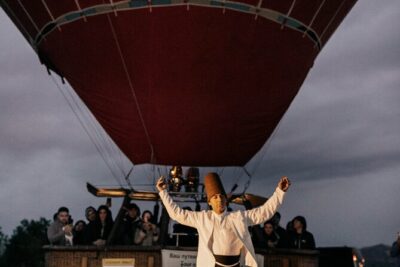
Cappadocia Dervish Ritual with live music (With 2 options)
Read our review →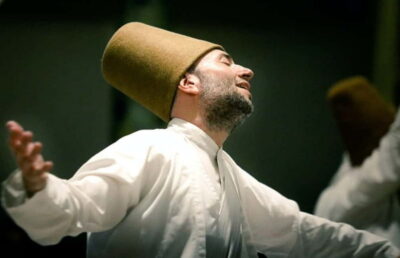
Browse the lists this tour appears in