
Reviewed · CAPPADOCIA COOKING CLASSES
Cappadocia Cooking Class
Cappadocia’s best food experience may begin in a market and end around a family table. This four-hour class takes you shopping in Urgup, then into a local home or kitchen to prepare dishes such as stuffed grape leaves, Turkish ravioli, yogurt soup, salads, stews, and a Cappadocian dessert made with flour and grape molasses. Kadir, the English-speaking guide and interpreter, often helps turn the meal into a broader conversation about Turkish life.
I like two things right away: you help choose ingredients before cooking, and the small group size, capped at six, leaves room for real conversation. I also like the choice of a 10 AM lunch class or a 4 PM dinner class. The main consideration is that this is not always a formal, recipe-by-recipe lesson. Depending on the host, you may do hands-on cooking, or you may mostly chop, stir, watch, and eat.
Key points to know before booking
- Shopping comes first: You visit small shops in Urgup before heading to the host’s kitchen.
- The host can vary: Classes may take place in a local home, an apartment, or a restaurant kitchen, with hosts including Basa, Ozgul, Feliz, Gul, and Nihat.
- Kadir often guides the experience: He provides English interpretation and helps explain food, culture, and daily life.
- You get more than one dish: The meal usually includes salads or meze, a main course, dessert, water, and Turkish tea or coffee.
- This is personal by design: Groups are limited to six, and some bookings become private classes when no other participants are scheduled.
- The class suits curious eaters: It is best for people who value local company and home cooking more than a polished chef demonstration.
Urgup shopping before the cooking begins
The class starts with hotel pickup at 10 AM for lunch or 4 PM for dinner. Pickup is available from hotels in Goreme, Avanos, Uchisar, Ortahisar, Cavusin, Urgup, Mustafapasa, Ayvali, and Nevsehir. That wide pickup area is useful in Cappadocia, where staying in one town can make an activity in another feel like a small logistical puzzle.
The first stop is Urgup, where you shop for ingredients. This part matters. Rather than appearing at a kitchen with a fixed basket of anonymous produce, you get a look at the everyday ingredients used in Turkish cooking. You might see seasonal vegetables, herbs, yogurt, grape leaves, flour, meat, or grape molasses, depending on the menu and season.
I like this opening because it gives you context for the meal. Turkish food is not only kebabs and restaurant mezze. Home cooking often leans on vegetables, legumes, yogurt, herbs, rice, dough, and slow-cooked dishes. A short market visit helps you see those ingredients before they become lunch or dinner.
Do not expect a long food tour of Urgup. The shopping is part of the cooking experience, not a separate market excursion. The exact shops and ingredients can change with the host and menu.
More home cooking classes in Goreme:
- Cappadocia traditional cooking with Chef
★ 4.5 · 66 reviews - Cooking Class at Exclusive Kings Valley
★ 5.0 · 54 reviews - Cappadocia Home Cooking Experience
★ 5.0 · 11 reviews
A local kitchen, not a staged cooking studio
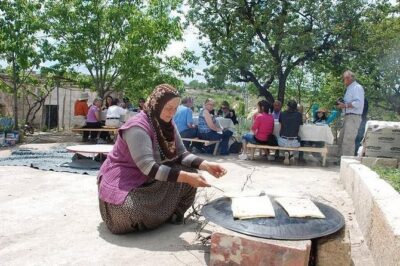
After shopping, you continue to the host’s home or kitchen. Several classes have taken place in private homes or apartments, while others have used a restaurant kitchen. One host, Nihat, prepared a modern apartment kitchen for a group of six. Another class took place in a restored old prison that had been converted into a restaurant.
That variation is important. You are not buying a standardized studio class with the same instructor and identical menu every day. The personality of the host shapes the experience. Basa has welcomed couples into her home, Ozgul has cooked with families and children, and Feliz has taught recipes in her own kitchen. Nihat has hosted guests with a vegetarian and gluten-free mix, adapting the food and finding gluten-free flour for dessert.
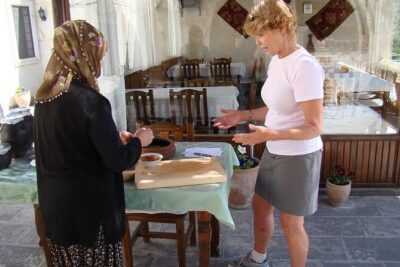
The home setting is the strongest part for people who want a look at ordinary Cappadocian life. You may sit at a family table, talk about Turkish culture, and see how food is prepared outside a restaurant. The hosts have been described as warm and welcoming, and some speak excellent English. When the cook does not speak English, an interpreter remains available.
That interpreter is not a minor detail. One host spoke no English, but the class still worked because the guide translated throughout. Kadir is frequently the guide associated with the experience. He has helped with pickup, shopping, translation, and conversation, and he brings information about Turkish history, culture, and everyday life into the meal.
What you may actually cook
The sample menu is broad rather than fixed. It includes seasonal salad, purslane salad, minced seasonal vegetable salad, stewed vegetables, meat stew with vegetables, stuffed grape leaves, Turkish ravioli, and a Cappadocian dessert called aside. Aside is prepared with flour, grape molasses, and butter or sunflower oil.
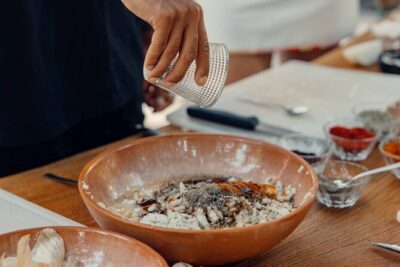
The individual classes add more possibilities. You might prepare a yogurt-based soup, meatballs wrapped in eggplant, rice with beans and pastrami sauce, semolina dessert, or several small mezze dishes. Some meals have included three mezze, a main dish, and dessert. The food is often the kind of cooking you may not see on a standard restaurant menu.
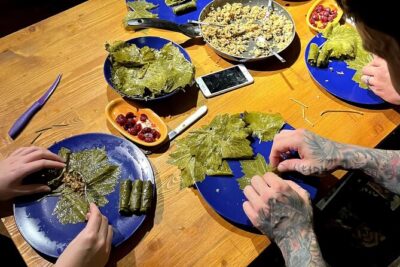
Stuffed grape leaves and Turkish ravioli are especially useful dishes to learn because they show two different sides of Turkish cooking. Grape leaves require care and patience, while ravioli brings dough, filling, and shaping into the lesson. If your host prepares part of the food in advance, you may not learn every step, but you still get a sense of how these dishes fit into a home meal.
The class can also be good for families. One host involved children in the preparation, which made them more willing to taste the finished food. That is a practical advantage for parents. A child who helps cut, mix, or shape something may approach an unfamiliar dish with less suspicion.
How hands-on is the class?
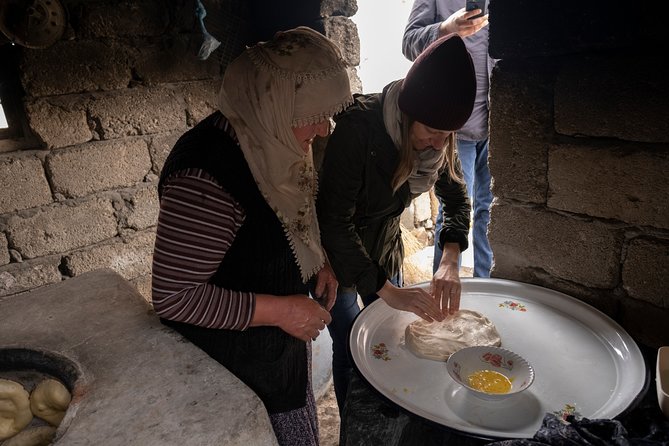
This is where you should set your expectations carefully. The experience is marketed as a cooking class, and some sessions are genuinely hands-on. You may prepare several dishes, learn recipes, work with the host, and try traditional techniques such as placing bread into a tandoor oven.
Other sessions are more like a home-cooked meal with cooking participation. A host may make a large pot of each dish while you help with cutting vegetables and stirring. Some ingredients may already be cooked. You may not work individually or leave with a precise recipe for every item.
Neither format is automatically better. If you want professional instruction, exact measurements, and a printed recipe packet, this may feel loose. If you want to cook alongside a local family, ask questions, and eat what the household prepares, the relaxed format can be the point.
I would treat the class as a cultural food visit with hands-on cooking, not as a culinary school lesson. That description fits both the intimate home sessions and the more structured restaurant classes.
A few more Goreme trips worth putting on the shortlist
- Private Cappadocia Food and Culture Tour: Turkish Cooking Class
★ 5.0 · 3 reviews
The meal and the conversation
Once the food is ready, you sit down to eat the meal you helped prepare. The booking includes three courses, water, black tea, or coffee. Alcohol is not included, and soda or other soft drinks are not included either.
Some hosts have served local wine, but you should not assume it is part of the package. The minimum drinking age is 21, and any alcoholic drinks are an extra consideration.
The meal is only half the value. The long conversations are what make this different from a restaurant dinner. Kadir has helped bridge conversations between visitors and hosts, while hosts such as Nihat and his wife have discussed Turkish culture, the economy, history, and modern daily life. That exchange can be especially rewarding if you are willing to ask questions and listen.
Some sessions run five or six hours instead of four. That may happen when the cooking takes longer or the conversation continues after the meal. Build in extra time if you have an evening show, airport transfer, or another fixed appointment.
Morning lunch or afternoon dinner
The 10 AM departure produces a lunch class. This is a good choice if you want the rest of your day free for Goreme’s valleys, museums, or another scheduled activity. It also avoids making a full evening commitment after a day of sightseeing.
The 4 PM departure produces dinner. This timing works well after a morning balloon flight or a day spent exploring Cappadocia, though you should leave room for the class to run long. The afternoon schedule also gives the meal a more social feel, especially when conversation continues over tea or wine.
Both options include pickup and drop-off. The service covers hotels in Goreme, Uchisar, Ortahisar, Urgup, Avanos, Cavusin, Mustafapasa, Ayvali, and Nevsehir. You should provide your hotel details when booking and allow some flexibility around pickup time, since the group may be collected from different towns.
The group limit is six. That is small enough for a shared table without turning the class into a crowd. Some bookings have operated as private classes for only two people, but you should not count on that unless the booking confirms it.
Is $176.61 a fair price?
At $176.61 per person, this is not a bargain meal. You can eat well in Cappadocia for much less. The value comes from the combination of transport, market shopping, instruction, interpretation, a three-course meal, and access to a local household or kitchen.
The price makes more sense for couples, families, and small groups who want an experience built around conversation. It is also useful if you are staying outside Goreme and would otherwise need to arrange transport to another town.
The value is weaker if your main goal is simply to learn standard recipes. The level of instruction changes by host, and some sessions use pre-cooked ingredients or group preparation. In that case, you may pay a premium for the social setting rather than for technical cooking training.
For me, the strongest reason to book is the chance to eat dishes that reflect family cooking rather than only the food presented to tourists. The second is the chance to meet a local host in a setting that feels personal. Those benefits are hard to price, but they matter more than a polished kitchen or a long list of recipes.
Who should book this experience?
You should consider it if you want food to open a door into local life. It suits people who enjoy asking questions, trying unfamiliar dishes, and spending several hours at an unhurried meal.
Families can do well here, especially when children are included in the preparation. The small group limit also helps parents keep the setting manageable. Tell the provider about dietary needs in advance. A past class accommodated vegetarians and a gluten-free participant, but you should not assume every host can provide the same options without notice.
Couples may appreciate the private feel of a home meal. Solo participants can also fit in, especially if they enjoy meeting other people at the table.
You may want to skip it if you dislike flexible schedules, have a strict diet that cannot be discussed ahead of time, or want a formal lesson with every dish prepared from start to finish in front of you. You may also find the price high if you are comparing it with an ordinary restaurant dinner.
Practical details before you reserve
Confirmation is provided at booking. Children must be accompanied by an adult, and service animals are allowed. The experience is offered in English through a local interpreter.
Free cancellation is available up to 24 hours before the start time for a full refund. Changes or cancellations made less than 24 hours before the start time are not accepted for a refund, and the cut-off follows local time.
Because the hosts and kitchens can vary, ask about the likely menu and cooking format if those details matter to you. This is particularly useful for vegetarian, gluten-free, or other dietary needs. Also tell the provider if you hope for a more hands-on class rather than a shared cooking demonstration.
Should you book the Cappadocia Cooking Class?
Book it if you want a local meal with a story behind it. The Urgup shopping stop, small group size, hotel transport, and English interpretation make the experience easy to join. The best sessions offer more than food: you cook with a host, hear about Turkish life, and leave with techniques or recipes you can try at home.
Go in with the right expectation. This is not always a precise cooking course. It can be a relaxed home visit where you help with practical tasks, eat well, and talk for hours. At $176.61, that personal contact needs to be what you value.
For food-focused visitors, families, and couples seeking a less standard Cappadocia activity, I would book it. If your schedule is tight or you want guaranteed culinary instruction, choose carefully and confirm the format first.
FAQ
Where does the Cappadocia Cooking Class take place?
The experience starts with shopping in Urgup and then continues to a local host’s home, apartment, or restaurant kitchen. The exact location and host can vary.
How long does the cooking class last?
The scheduled duration is approximately four hours. Some sessions may last five to six hours when cooking and conversation continue.
What time does the class begin?
The lunch class begins with pickup at 10 AM. The dinner class begins with pickup at 4 PM.
Is hotel pickup included?
Yes. Free pickup and drop-off are available from hotels in Goreme, Avanos, Uchisar, Ortahisar, Cavusin, Urgup, Mustafapasa, Ayvali, and Nevsehir.
What food might be prepared?
Possible dishes include seasonal salads, purslane salad, vegetable dishes, meat stew, stuffed grape leaves, Turkish ravioli, yogurt soup, eggplant-wrapped meatballs, rice with beans and pastrami sauce, and aside, a Cappadocian flour and grape molasses dessert.
Are drinks included?
Water, black tea, and coffee are included. Alcoholic drinks and soda or other soft drinks are not included.
Is the class taught in English?
The experience is offered in English with a local interpreter. The host may not always speak English, but the interpreter is available during the activity.
How many people can join the class?
The maximum group size is six people. Some bookings may operate as private classes when only one party is scheduled.
Can children join?
Yes. Children must be accompanied by an adult. Children have also been included in food preparation during past classes.
What is the cancellation policy?
You can cancel up to 24 hours before the experience starts for a full refund. Cancellations or changes made less than 24 hours before the start time are not accepted for a refund.
More Hands-On Workshops in Goreme
- Cappadocia: Sand-Brewed Turkish Coffee Workshop
★ 4.9 · 745 reviews - Avanos: Pottery Workshop with Clay Making Experience
★ 4.8 · 233 reviews - Cappadocia Pottery Workshop Class
★ 5.0 · 191 reviews - Cappadocia: Turkish Mosaic Lamp Workshop in Göreme – All Included
★ 5.0 · 139 reviews
Just added around Goreme
- Classic Car Tour in Cappadocia★ 4.7 · 3 reviews
- Whirling Dervish Show★ 4.8 · 21 reviews
- Visit to Cappadocia ceramic workshop and carpet store★ 4.6 · 19 reviews
- Turkish Night Show: Unlimited Alcohol, Dinner and Transfer★ 4.2 · 11 reviews
- Turkish Night Show with dinner and unlimited drinks★ 4.3 · 6 reviews
- Cappadocia Turkish Night Show with Dinner and Drinks★ 3.7 · 6 reviews
- Turkish Night Show★ 3.9 · 3 reviews
- Cappadocia Turkish Traditional Bath – Hamam – Bubble Massage★ 4.3 · 3 reviews
Cappadocia Cooking Classes, compared.
Private Cappadocia Food and Culture Tour: Turkish Cooking Class
Read our review →Browse the lists this tour appears in