Reviewed · TOURS
7 Days Istanbul, Cappadocia and Ephesus Tour
Turkey packs several ancient worlds into seven busy days. You move from Ottoman Istanbul to Cappadocia’s soft volcanic rock, then on to the marble streets of Ephesus and the great ruins of Priene, Miletus, and Didyma. Private touring makes that ambitious route workable, since your guide and driver handle the transfers while you focus on the sights.
I like the door-to-door airport transfers and the mix of famous places with less visited stops such as Soganli Valley and Priene. I also like having a private guide, since the value of places like Topkapi Palace, Ephesus, and the underground city depends on good explanation. The drawback is pace: several days include flights, long drives, and early checkouts, so this is not a slow, restful holiday.
Key points to know before booking
- Three very different regions: Istanbul, Cappadocia, and the Aegean coast each offer a distinct side of Turkey.
- Private touring throughout: Your group has its own guide, air-conditioned minivan, and airport transfers.
- Seven lunches included: Dinners, drinks, alcohol, and personal expenses are extra.
- A packed Cappadocia schedule: Expect fairy chimneys, pottery, cave churches, an underground city, and several viewpoints.
- Ancient sites beyond Ephesus: Priene, Miletus, Didyma, the Temple of Artemis, and the Basilica of St. John add real depth.
- The route requires stamina: Hotel changes, flights, and a one-and-a-half-hour drive after landing in Izmir make practical planning important.
Istanbul begins with palaces, bazaars, and the Bosphorus
Your first day is deliberately light. A driver meets you at Istanbul Airport at the exit gate with a sign bearing your name, then takes you to your hotel in the old district. After check-in and some rest, your guide gives you an orientation about Istanbul and the week ahead.
That welcome matters after an international flight. You are not left to work out the airport transfer or city transport on your own. The stated start time for the touring days is 9:30 a.m., although airport and flight arrangements naturally shape the exact schedule.
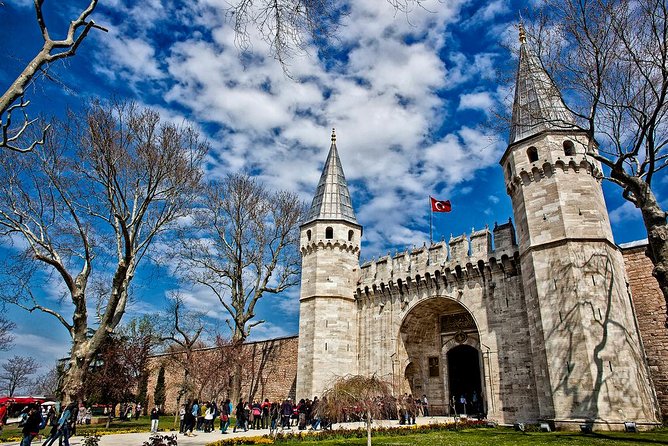
Day two begins at the Blue Mosque, built in 1616 by Sultan Ahmet I. The mosque is one of Istanbul’s major Ottoman landmarks, and the one-hour visit gives you a useful introduction to the city’s imperial center. Dress respectfully for a mosque visit, and expect the visit to follow any access rules in force that day.
From there, you spend about two hours at Topkapi Palace. This is more than a single royal building. It is a collection of courtyards and museums filled with objects gathered by Ottoman sultans over almost five centuries. I would give this stop your full attention. The palace helps explain how the Ottoman court functioned, while the Blue Mosque gives you a more direct sense of imperial religious architecture.
After lunch, you visit the Grand Bazaar for about an hour. It dates from the 16th century and remains one of the world’s great covered shopping districts. You will find jewelry, textiles, souvenirs, and other goods, but the point is not simply to shop. The lanes show how commerce has long been part of Istanbul’s daily life. Keep your expectations sensible: an organized private tour can introduce the bazaar, but you will need extra time if you want to bargain or browse carefully.
The route then continues downhill from the area of Suleymaniye Mosque to the Spice Market. This is a good contrast with the Grand Bazaar. The market is more compact and focused on food products, spices, and Turkish delight. The walk downhill sounds easy, but the day includes several hours on your feet, so comfortable shoes are a basic requirement.
Still narrowing it down? These other Goreme days come up again and again:
- Cappadocia Hot Air Balloon Ride / Royal Balloon
★ 5.0 · 6,829 reviews - Cappadocia: Goreme Hot Air Balloon Flight at Sunrise
★ 5.0 · 4,924 reviews - Cappadocia Hot Air Balloon Ride/ Turquaz Balloons
★ 5.0 · 3,330 reviews
Hagia Sophia and a two-hour cruise on day three
Day three starts with checkout and a visit to the Hippodrome, once the center of Roman public life in Constantinople. The surviving monuments include the Obelisk of Thutmose III, the German Fountain, the Serpent Column, and the Obelisk of Constantine. You spend about an hour here, mostly outdoors, so weather can affect comfort.
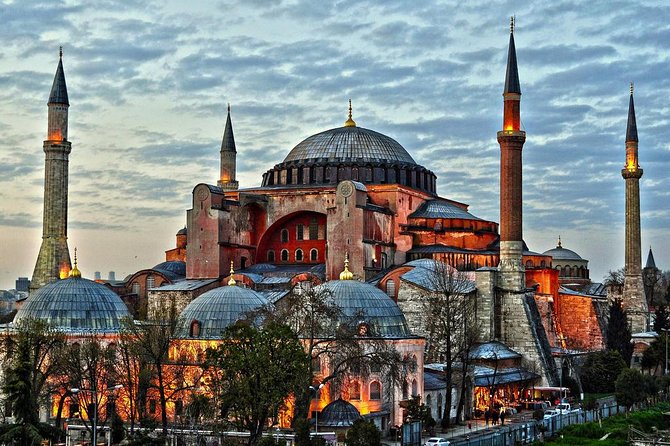
Next comes Hagia Sophia, built in 537 under Justinian. The two-hour visit gives you time to take in the building’s scale and its long religious history. It is one of those places where a guide adds real value, since the structure has served different religious and political purposes over many centuries.
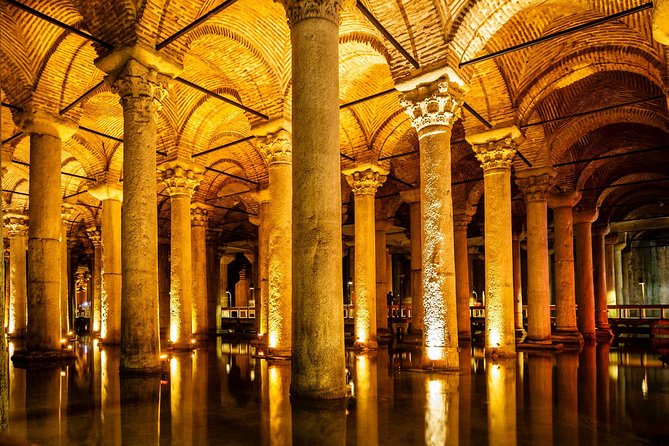
The Basilica Cistern follows. Built around the same period as Hagia Sophia, this underground water chamber offers a change of mood from the open square and monumental church. The visit lasts about an hour. After lunch, you board a Bosphorus cruise of roughly two hours.
The cruise is one of the tour’s best changes of pace. From the water, you see Ottoman palaces, summer residences, and waterfront homes while Istanbul unfolds on both sides of the strait. This is not just a sightseeing boat ride. It shows why the city has always been tied to the water and why its European and Asian sides feel like parts of one city with different rhythms.
The day ends with a transfer to Istanbul Airport and onward travel toward Cappadocia. The schedule lists airport transfer time, a Cappadocia tour or arrival segment, and an overnight stay in Cappadocia. Confirm the exact flight time and ticket arrangements before booking, since the supplied inclusions specifically mention transfers, tours, guides, vehicle, and lunches, but do not clearly list domestic air tickets.
Cappadocia trades imperial buildings for volcanic rock
Cappadocia is the visual change you came for. Day four covers the region’s unusual rock formations, cave churches, craft traditions, and viewpoints.
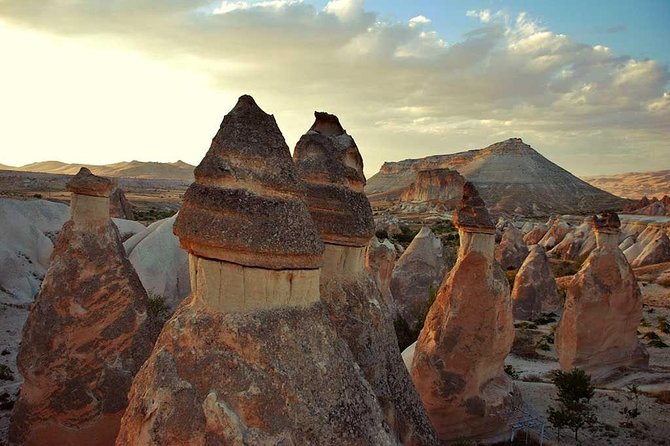
Devrent Valley, also called Imagination Valley, is the first stop. You have about 30 minutes to look at fairy chimneys shaped by volcanic rock and erosion. The formations invite comparison to animals and other figures, but the main pleasure is simply seeing how much the rock changes from one ridge to the next.
At Pasabag, you spend about an hour among some of Cappadocia’s most striking fairy chimneys. Their tall, layered forms are often compared to the settings of fantasy films. This is a more focused stop than Devrent Valley, with time to walk around and photograph the formations.
Avanos adds a human side to the day. At a local pottery shop, you learn how pottery traditions connect to the Hittite period. The stop lasts about an hour. It is also one of the places where you should pay attention to the shopping element. A craft demonstration can be worthwhile, but do not feel pressured to buy anything simply because it is part of the route.
The Goreme Open Air Museum is the major cultural stop. You spend about two hours among cave churches carved into the rock. The site is part of Goreme National Park and shows how religious communities adapted to Cappadocia’s soft volcanic formations. The churches matter not only for their setting, but also for the way their interiors preserve traces of early Christian worship.
The day continues with views of cave dwellings, Uchisar Castle, Pigeon Valley, and Goreme Panorama. Uchisar Castle is one of the best high points for seeing the area, while Pigeon Valley offers a different angle on the rock formations. A separate 30-minute stop at Pigeon Valley gives you time for photos, and Goreme Panorama closes the day with another broad view.
This is a full day with many short stops. That works well if you want to cover a lot of ground and collect a strong first impression of Cappadocia. It works less well if your ideal visit means long walks, quiet time in one valley, or a slower look at the cave churches. The private format helps because your group is not tied to a large coach, but the route itself remains busy.
Kaymakli shows Cappadocia below ground
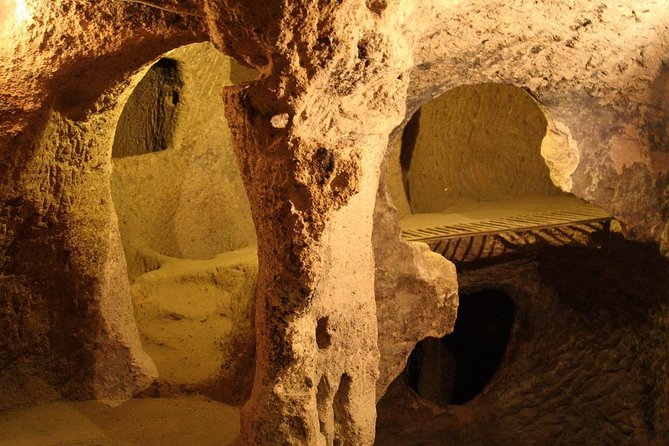
Day five begins with checkout and a drive to Kaymakli Underground City. You spend about two hours here, learning how Christian communities protected themselves during periods of persecution and invasion. The underground setting is the point, but it can also be physically demanding. If tight passages or uneven footing concern you, ask your tour operator for practical details before you commit.
The route then moves to Sinasos, an old Greek village re-inhabited after 1927. This gives you a look at Cappadocia beyond its famous rock formations. The one-hour stop is useful because it connects the region’s scenery with the communities that lived among it.
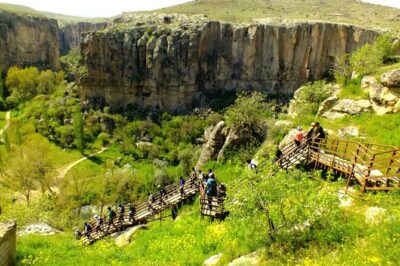
Soganli Valley follows for about an hour. The village is mostly abandoned, and its churches offer a quieter counterpoint to Goreme. You are likely to find the setting less polished and more open than the principal Cappadocia sights. That is part of its appeal, though it also means the stop may feel less immediately dramatic.
Later, you drive about an hour to Kayseri Erkilet Airport and fly to Izmir. After landing, the transfer to your hotel takes about one and a half hours. This is a major travel day, not a sightseeing day with a short flight added on. Pack your essentials where you can reach them, and expect to be ready for the next morning rather than looking for a late-night dinner or extra outing.
A few more Goreme trips worth putting on the shortlist
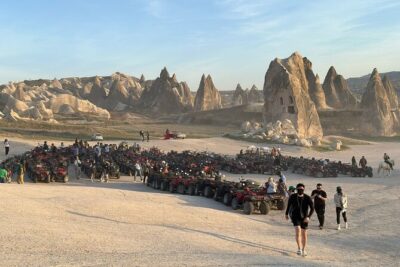
- Cappadocia Sunset ATV Tour
★ 5.0 · 2,984 reviews - Cappadocia Sunrise Hot Air Balloon Flight / Discovery Balloons
★ 5.0 · 2,882 reviews - Cappadocia: Goreme Hot Air Balloon Flight Over Fairychimneys
★ 4.8 · 2,347 reviews - Green (South) Tour Cappadocia (small group) with lunch and ticket
★ 5.0 · 2,317 reviews
Ephesus brings the ancient world into sharp focus
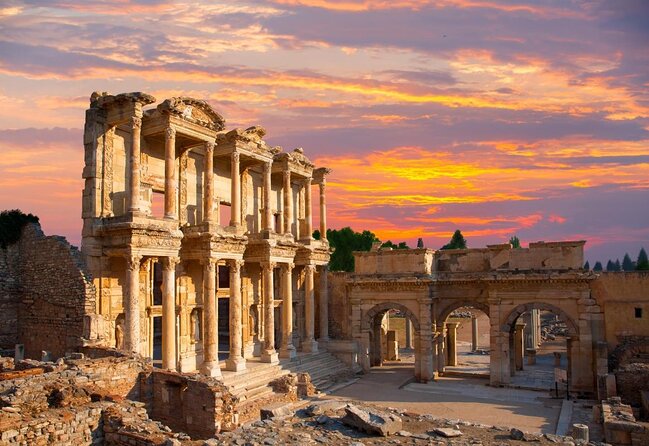
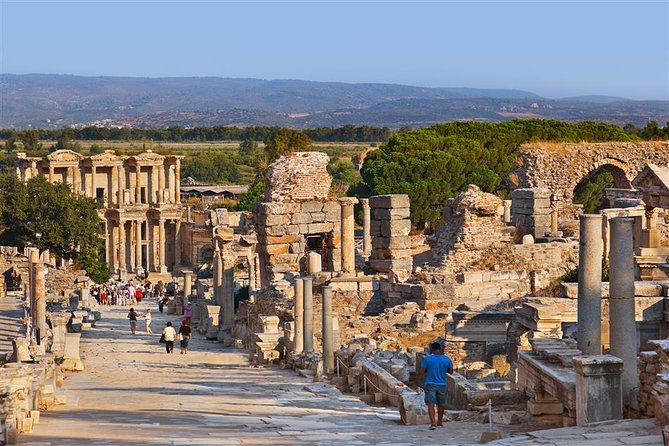
Day six is devoted to Ephesus and nearby religious and archaeological sites. Ephesus is one of the tour’s strongest stops because the ancient city is large enough to make you feel as if you are walking through a real urban center rather than viewing isolated ruins.
You spend about two hours at the ancient city, strolling through its streets and major remains. A guide can help you understand how the buildings fit together and why the city mattered. Wear sturdy shoes and prepare for sun, since the experience involves walking through an exposed archaeological site.
After lunch, the route includes the Temple of Artemis, one of the Seven Wonders of the Ancient World. The present remains are limited compared with the original temple, so expectations matter. This is a stop for historical importance and context, not for a complete monument still standing in its original form.
The Basilica of St. John follows. Justinian financed the basilica, just as he financed Hagia Sophia in Constantinople. The connection links your Istanbul sightseeing with the Aegean part of the trip and gives the day a clear historical thread.
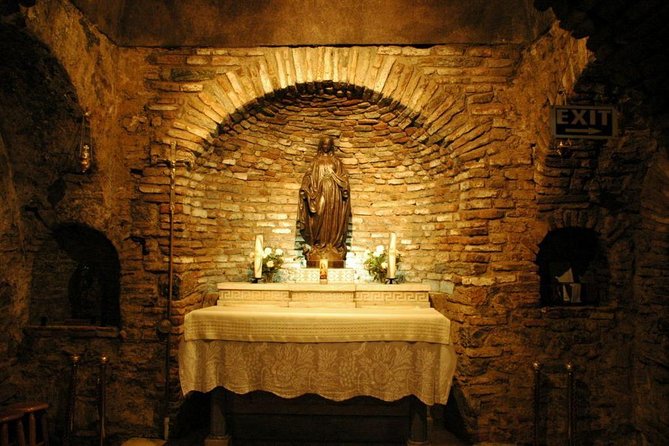
At the House of the Virgin Mary, you have about an hour. The visit adds a religious dimension to the day and is handled as a distinct stop from the ancient city. You then visit the Selcuk Ephesus Museum for about an hour, where artifacts from Ephesus help fill in details that are difficult to see among the ruins themselves.
The sequence is well judged. Ephesus gives you the streets and buildings, the museum gives you objects, and St. John and the Virgin Mary’s House broaden the story beyond classical antiquity. The drawback is that this day keeps moving. If Ephesus is your main reason for booking, ask in advance how much time is spent inside the ancient city itself and how the guide balances it against the other stops.
Priene, Miletus, and Didyma reward ancient-history fans
The last touring day leaves the most famous sites behind and heads toward three important ancient cities. The first drive to Priene takes about one to two hours. Priene began as an Ionian port city in the 7th century B.C., but the Meander River later silted up the coast. That change is a useful reminder that geography can alter a city’s fortunes as much as war or politics.
You spend about two hours at Priene. The site is a good choice for anyone who enjoys ancient city planning and a less familiar setting. It is not as immediately famous as Ephesus, so the guide’s explanation matters. Ask questions about the city’s former position by the sea and how the silting changed its role.
Miletus follows, with another two-hour visit. The city is associated with philosophers including Thales, Anaximenes, and Hekaistos. You get a stronger sense here of the intellectual life connected with the Ionian cities, not just their temples and theaters.
The final ancient site is Didyma and the Temple of Apollo. The temple was a major oracle center, and the ruins make a powerful final stop for the classical portion of the tour. Depending on the schedule, lunch may come after the visit, so carry water and a small snack if needed, since the meal timing can be later than on other days.
From there, you transfer to Izmir Adnan Menderes Airport and fly to Istanbul, depending on the flight schedule. The tour ends with the airport transfer in Istanbul. Confirm whether your international departure is timed to allow for that final domestic flight and transfer, since the package does not state a guaranteed overnight at the end.
What the $1,410 price really covers
At $1,410 per person, this is not a budget independent trip. It is a convenience-focused private arrangement covering seven days of guiding, private airport transfers, a private air-conditioned minivan on touring days, and seven lunches.
The value is strongest if you are short on time or do not want to manage Turkey’s internal transport yourself. The route includes multiple airports, long road transfers, and several hotel changes. Having one company coordinate the moving parts can save effort and reduce the risk of missing a connection between sightseeing regions.
The price also buys privacy. Only your group participates, so you can ask questions, adjust the pace within reason, and avoid being tied to a large bus. Past bookings connected with Pupa Travel specifically praise the responsiveness of Ilker Olcaydu for travel planning and the guiding of Mustafa. Availability is not guaranteed, but those are useful names to request when discussing your booking.
Read the inclusions carefully. Dinners are not included, and neither are alcoholic drinks or personal expenses. The supplied details also do not clearly state that hotels or domestic flights are included in the $1,410 price, even though hotels and flights appear in the route. Ask for a written breakdown covering lodging, internal air tickets, entrance fees, and the seven lunches before paying.
The cancellation policy is strict: the experience is non-refundable and cannot be changed for any reason. If the minimum number of participants is not met and the operator cancels, you are offered another date or experience, or a full refund. That makes travel insurance and careful date checking sensible.
Who should book this private Turkey route?
I would choose this tour if you want the country’s major highlights in one organized week and value a private guide more than free time. It suits first-time visitors who want context at the monuments, couples or families who prefer their own vehicle, and history-minded visitors who want more than Istanbul and Ephesus alone.
I would think twice if you dislike frequent packing, airport transfers, or early checkouts. The schedule is ambitious, and Cappadocia in particular could easily fill several slower days. Independent visitors who already know Turkey may prefer booking fewer regions and spending more time in each.
Book it if your priority is variety, private transport, and a strong sweep from Ottoman Istanbul through Cappadocia to the ancient Aegean. Before you commit, get clear answers about the hotels, domestic flights, final Istanbul timing, and the exact guide assigned. Those details will decide whether the price feels like good value for your trip.
FAQ
How long is the tour?
The tour lasts approximately seven days, beginning with arrival at Istanbul Airport and ending with a transfer to the airport after the final day’s travel.
Is this a private tour?
Yes. Only your group participates, with private tours, private airport transfers, private guiding, and a private air-conditioned minivan on the tours.
What meals are included?
Seven lunches are included. Dinners, alcoholic beverages, and personal expenses are not included.
What are the main destinations?
The route covers Istanbul, Cappadocia, Ephesus and Selcuk, plus Priene, Miletus, and Didyma near the Aegean coast.
Is airport pickup provided?
Yes. On arrival at Istanbul Airport, a driver meets you at the exit gate holding a board with your name and transfers you to your hotel.
Does the tour include a Bosphorus cruise?
Yes. Day three includes an approximately two-hour Bosphorus cruise.
What is the cancellation policy?
The experience is non-refundable and cannot be changed for any reason. If the operator cancels because the minimum number of participants is not met, you are offered a different date or experience, or a full refund.
Just added around Goreme
- Classic Car Tour in Cappadocia★ 4.7 · 3 reviews
- Whirling Dervish Show★ 4.8 · 21 reviews
- Turkish Night Show: Unlimited Alcohol, Dinner and Transfer★ 4.2 · 11 reviews
- Turkish Night Show with dinner and unlimited drinks★ 4.3 · 6 reviews
- Visit to Cappadocia ceramic workshop and carpet store★ 4.6 · 19 reviews
- Cappadocia Turkish Night Show with Dinner and Drinks★ 3.7 · 6 reviews
- Turkish Night Show★ 3.9 · 3 reviews
- Cappadocia Turkish Traditional Bath – Hamam – Bubble Massage★ 4.3 · 3 reviews
Tours, compared.
Green (South) Tour Cappadocia (small group) with lunch and ticket
Read our review →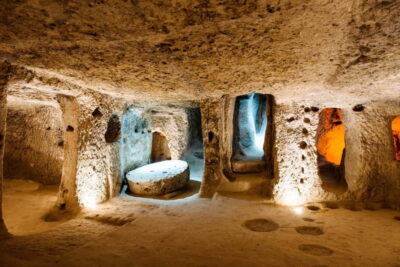
Full Day Cappadocia Red and Green Combined Day Tour
Read our review →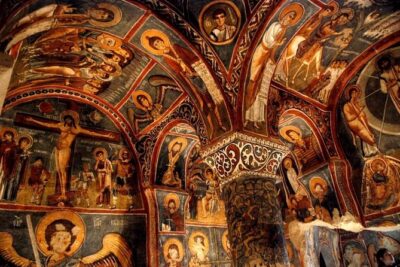
Red (North) Tour Cappadocia (small group) with lunch and tickets
Read our review →
Full Day Cappadocia Tour( Red Tour + Underground City )
Read our review →